Amani Pediatric Dentistry

Orthodontic Evaluations

You might think orthodontic treatment is something to worry about when your child is a teenager, but the American Association of Orthodontists recommends that all children have their first orthodontic evaluation by age 7. This doesn’t necessarily mean your child will need braces that early, but it allows us to monitor dental development and identify potential issues while there’s still time for optimal intervention.

Our orthodontic evaluations are a proactive approach to your child’s oral health, helping us catch problems early when treatment can be simpler, shorter, and more effective.

Why Orthodontic Evaluations Matter

By age 7, children have a mix of baby teeth and permanent teeth, which gives us valuable insight into how the permanent teeth will come in and how the jaws are developing. At this stage, we can identify developing problems with jaw growth and emerging teeth while some baby teeth are still present, making certain orthodontic corrections easier and more stable.

Early evaluation doesn’t always mean early treatment. In many cases, we simply monitor your child’s development over time and intervene only when the timing is optimal. However, for some conditions, early intervention can prevent more serious problems from developing and make future treatment shorter and less complicated.

What Is an Orthodontic Evaluation?

An orthodontic evaluation is a comprehensive assessment of your child’s teeth, jaws, and bite. We examine tooth alignment and spacing, jaw growth and relationship, bite patterns (how upper and lower teeth meet), facial balance and proportions, and oral habits that might affect development. We also review dental x-rays to see teeth that haven’t erupted yet and assess the development of wisdom teeth in older children.

Common Issues We Detect During Evaluations

Crowding

When there isn't enough space in the jaw for all the permanent teeth to fit properly. Early intervention can sometimes guide jaw growth to create more space.
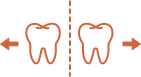
Spacing Issues

Excessive gaps between teeth that may not close on their own or could indicate missing teeth or jaw size discrepancies.
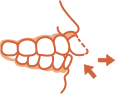
Overbite

When upper front teeth protrude significantly over lower teeth. Severe overbites can affect appearance and function.
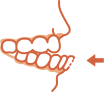
Underbite

When lower teeth extend beyond upper teeth, often due to lower jaw overgrowth or upper jaw undergrowth.

Crossbite

When some upper teeth bite inside the lower teeth. This can affect jaw growth and cause uneven tooth wear if not corrected.

Open Bite

When upper and lower teeth don't overlap when biting down, often caused by thumb-sucking or tongue-thrusting habits.

Impacted Teeth

Teeth that are blocked from erupting properly, most commonly canine teeth and wisdom teeth.

Jaw Problems

Issues with jaw size, shape, or alignment that can affect bite function and facial appearance.

Orthodontic

Orthodontic treatment timing varies depending on the specific issue and your child’s development. Here’s a general timeline:

1

First Evaluation (Age 7)

Initial assessment to identify developing problems. Most children won't need treatment yet, but we establish a baseline and begin monitoring development.

2

Phase I Treatment (Ages 7-10)

Also called interceptive treatment or early treatment. Addresses specific problems that are easier to correct while the child is still growing. May include palate expanders, partial braces, or appliances to guide jaw growth. Not needed for all children.

3

Phase II Treatment (Ages 11-14)

Full orthodontic treatment once all or most permanent teeth have erupted. This is when most comprehensive orthodontic treatment occurs, typically with full braces or clear aligners. Treatment usually lasts 18-24 months.

4

Adolescent/Adult Treatment (Age 15+)

Treatment is still possible and effective for teens and adults. May take slightly longer but can achieve excellent results. Clear aligners are a popular option for older teens.

Benefits of Early Orthodontic Evaluation

Signs Your Child May Need an Orthodontic Evaluation

While we recommend an evaluation by age 7 for all children, certain signs suggest your child should be seen sooner:

  • Early or late loss of baby teeth
  • Difficulty chewing or biting food
  • Mouth breathing or breathing problems
  • Thumb-sucking or finger-sucking habits after age 5
  • Crowded, misplaced, or blocked teeth
  • Jaws that shift or make sounds when moving
  • Difficulty speaking or pronouncing certain sounds
  • Biting the cheek or roof of the mouth frequently
  • Teeth that don’t meet properly or at all
  • Facial imbalance or asymmetry
  • Grinding or clenching teeth

What If Treatment Is Needed?

If we determine that your child would benefit from orthodontic treatment, we’ll discuss all available options, including the type of treatment recommended, expected duration, approximate cost and insurance coverage, and alternative treatment approaches if applicable. For comprehensive orthodontic treatment, we may refer you to an orthodontist who specializes in complex tooth movement and bite correction. We’ll coordinate with the orthodontist to ensure continuity of care.

For simpler early intervention treatments, such as space maintainers or habit-breaking appliances, we can often provide these services in our practice.

Monitoring Without Treatment

Many children who have orthodontic evaluations at age 7 don’t need immediate treatment. Instead, we place them on an observation schedule, seeing them periodically (typically every 6-12 months) to monitor dental development. This allows us to identify the optimal time to begin treatment if it becomes necessary.

During these monitoring visits, we track how permanent teeth are erupting, assess jaw growth and development, watch for emerging problems, and keep you informed about your child’s orthodontic future. This proactive monitoring ensures we don’t miss the ideal treatment window.

Does Every Child Need Braces?

No! While many children benefit from orthodontic treatment, not everyone needs it. Some children’s teeth develop beautifully without intervention. Others may only need minor treatment. Our goal is to recommend treatment only when it will significantly benefit your child’s oral health, function, or appearance.

Schedule Your Child's Orthodontic Evaluation

If your child is age 7 or older and hasn’t had an orthodontic evaluation, or if you’ve noticed any concerning signs, schedule an appointment today. Early detection makes all the difference.

Related Services You Might Be Interested In

Preventive Care

Tooth Extractions

Dental Sealants